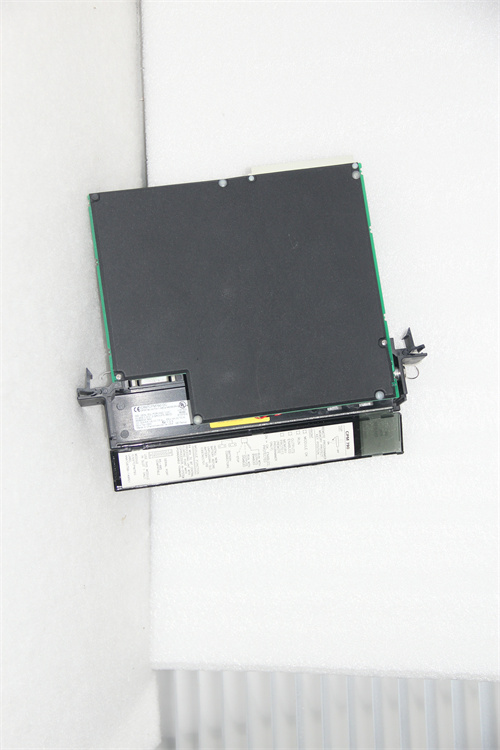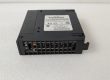
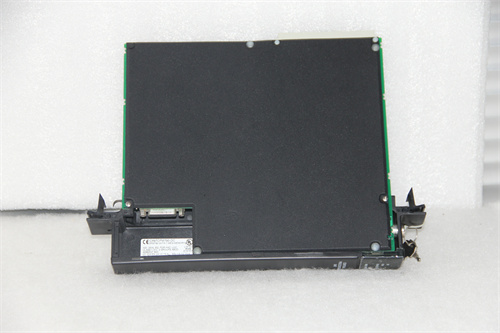
Parameter Specifications
- Power Supply: The IC697CPM790 operates on a 24V DC power supply. The power consumption is approximately 20 – 25W, which is designed to ensure stable operation in industrial environments.
- Processor Performance: It is equipped with a high – performance processor with a clock speed that allows for rapid execution of control algorithms. It has 1MB of non – volatile memory for program storage and 2MB of RAM for real – time data processing, enabling efficient handling of complex tasks.
- I/O Capacity: It supports a large number of input and output modules. It can handle up to 2048 digital I/O points and 256 analog I/O points, providing great flexibility for different industrial applications.
- Communication Interfaces: There are multiple communication interfaces available. It has an Ethernet port supporting a data transfer rate of 100Mbps and adhering to the Modbus TCP protocol. Additionally, it has two serial ports (RS – 232/RS – 485) supporting Modbus RTU, which can be used to connect to various devices and systems.
- Operating Temperature Range: It can function within a temperature range of – 20°C to 60°C, making it suitable for use in harsh industrial settings with significant temperature variations.
Applications
- Industrial Automation: In manufacturing plants, the IC697CPM790 can serve as the central control unit for automation systems. It can manage production lines, control the operation of machinery, and monitor the status of equipment through connected sensors and actuators.
- Process Control: In chemical, pharmaceutical, and food processing industries, it can regulate and monitor industrial processes. It can control parameters such as temperature, pressure, and flow rate to ensure the quality and safety of the production process.
- Building Automation: In commercial buildings, it can be used to control and monitor building systems such as HVAC, lighting, and access control, providing a comfortable and energy – efficient environment.
Weight and Dimensions
- Weight: Approximately 1.8 kg, which is relatively heavy due to its high – performance components but still manageable for installation and maintenance.
- Dimensions: It has a compact design with dimensions of about 220mm (length) x 180mm (width) x 90mm (height). This size allows it to be easily installed in standard control cabinets.
Features
- High – speed Processing: The powerful processor enables fast execution of control programs, ensuring real – time response in industrial control applications.
- Large I/O Capacity: The ability to support a large number of I/O points makes it suitable for complex industrial systems that require extensive sensor and actuator connections.
- Multi – protocol Communication: The support for both Ethernet – based and serial – based communication protocols provides flexibility in integrating different types of devices and systems in an industrial network.
Stability and Reliability
- Robust Construction: Built with high – quality components and a durable enclosure, it can withstand industrial vibrations, shocks, and electromagnetic interference.
- Power Management: The power supply design ensures stable power delivery to the internal components, reducing the risk of system failures due to power fluctuations.
- Long – term Testing: Through extensive long – term testing, it has proven to have a reliable performance over time, with a low failure rate.
Practical Case
In an oil refinery, the IC697CPM790 is used as the main control unit for a distillation process. The large number of I/O points allows it to connect to various sensors that measure temperature, pressure, and flow rate at different stages of the distillation tower. The Ethernet port is connected to the refinery’s central control system for data sharing and remote monitoring. One day, there was a sudden power outage in the area. Thanks to the power management and robust construction of the IC697CPM790, the device was able to save its state and quickly resume normal operation after the power was restored. The high – speed processing and multi – protocol communication capabilities ensured that the distillation process continued smoothly, minimizing production losses.