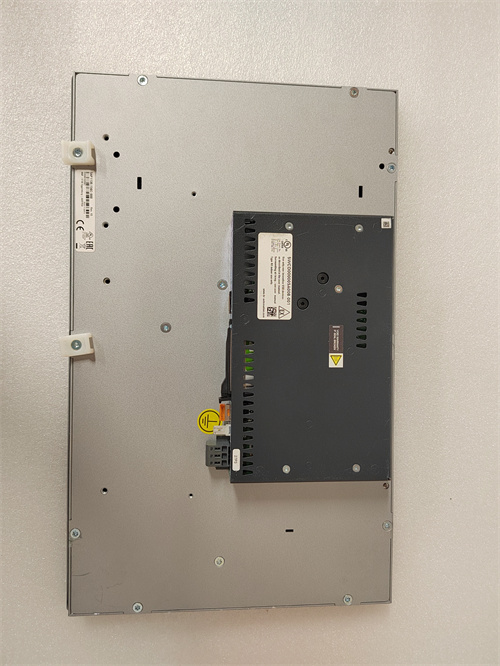
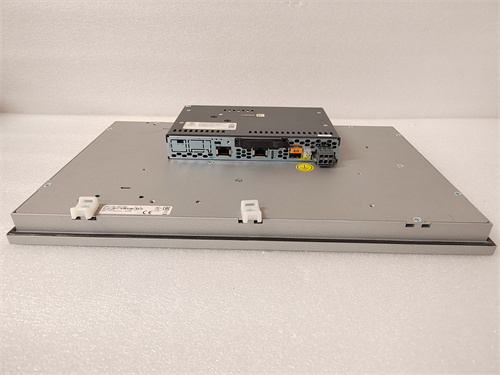
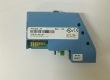
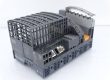
The 5AP1130.156C – 000 is designed to operate on a specific power supply. It typically requires a DC voltage input within the range of 24V ±10%. This voltage tolerance ensures compatibility with a variety of industrial power sources. The power consumption is relatively low, around 8 – 12W, making it energy – efficient.
Input/Output Channels
Digital Inputs: It is equipped with a set of digital inputs. The exact number may vary, but generally, it has sufficient inputs to interface with various sensors. These inputs can handle signals with a voltage range suitable for standard industrial sensors, such as 0 – 24V signals. The response time of the digital inputs is fast, usually within a few milliseconds, enabling quick detection of sensor states.
Digital Outputs: There are also several digital outputs. These outputs can be configured to provide either a dry contact or a transistor – based output. The output rating for the dry contact can handle a certain amount of current, typically up to 2A at a specified voltage (e.g., 250VAC), while the transistor output is suitable for low – power control applications.
Communication Interfaces
It features an RS – 485 communication interface, which supports the Modbus RTU protocol. This allows for seamless integration with other devices in an industrial network, enabling data exchange and remote control.
Operating Conditions
The device can operate within a wide temperature range, from – 20°C to 60°C. It can also tolerate a relative humidity range of 5% – 95% (non – condensing), making it suitable for use in various harsh industrial environments.
Uses
Industrial Automation
In industrial manufacturing processes, the 5AP1130.156C – 000 can be used to monitor the status of machinery and equipment through its digital inputs. For example, it can detect the open/closed state of valves, the position of limit switches, etc. Based on the input signals, it can then control other devices via its digital outputs, such as starting or stopping motors.
Building Automation
In smart building systems, it can be employed to manage lighting, ventilation, and access control. It can receive signals from occupancy sensors, light sensors, etc., and control the corresponding actuators to optimize energy consumption and enhance comfort.
Process Control
In chemical or food processing plants, it can be used to monitor and control process parameters. For instance, it can detect the level of liquids in tanks and control the filling or emptying processes.
Weight and Dimensions
Weight
The device weighs approximately 0.8 kg, which is relatively light and easy to install and handle.
Dimensions
It has dimensions of about 150mm (length) x 100mm (width) x 60mm (height). Its compact size allows it to be easily installed in control cabinets or other limited – space areas.
The fast – responding digital inputs and outputs enable real – time monitoring and control, which is crucial in industrial applications where quick reactions are required.
Flexible Configuration
The ability to configure the digital outputs (dry contact or transistor) provides flexibility to meet different load requirements.
Ease of Integration
The support for the Modbus RTU protocol via the RS – 485 interface makes it easy to integrate into existing industrial control networks.
Stability and Reliability
Robust Design
The device is built with high – quality components and a sturdy enclosure, which can withstand vibrations, dust, and electromagnetic interference in industrial environments.
Fault – Tolerant Software
The software has self – diagnostic and error – handling functions. In case of a fault, it can quickly detect the problem and take appropriate actions to ensure continuous operation.
Long – Term Performance
Through strict quality testing and long – term stability verification, it can maintain reliable performance over an extended service life.
Real – world Applications
Textile Factory
In a textile factory, the 5AP1130.156C – 000 is used to monitor the operation of spinning machines. It detects the status of various sensors on the machines, such as thread breakage sensors, and controls the machine’s start and stop functions accordingly. This helps to improve production efficiency and reduce waste.
Hotel Building Automation
In a hotel, it is used to manage the lighting and air – conditioning systems. It receives signals from occupancy sensors in guest rooms and corridors and controls the lighting and HVAC equipment to save energy while providing a comfortable environment for guests.