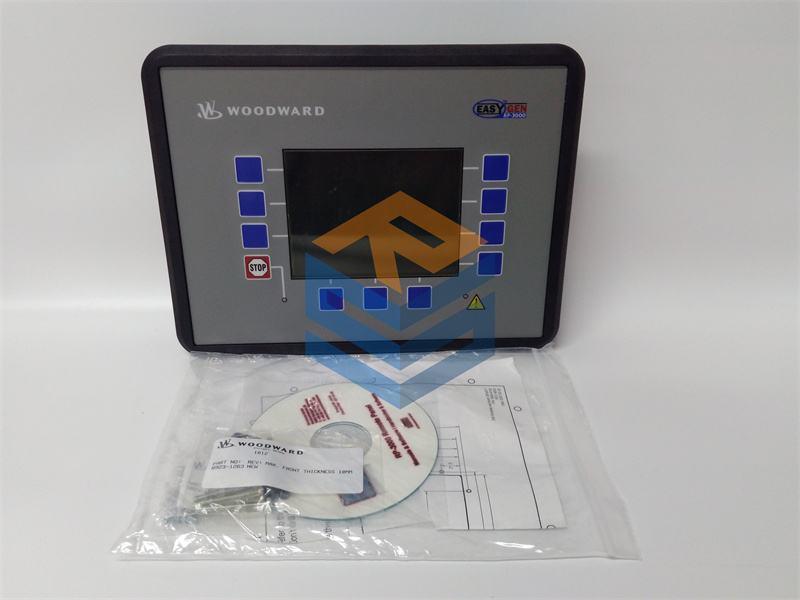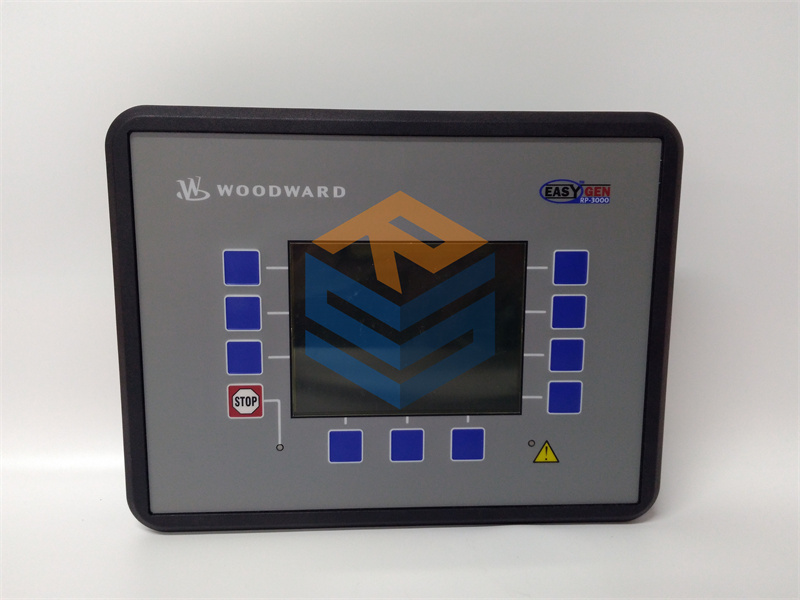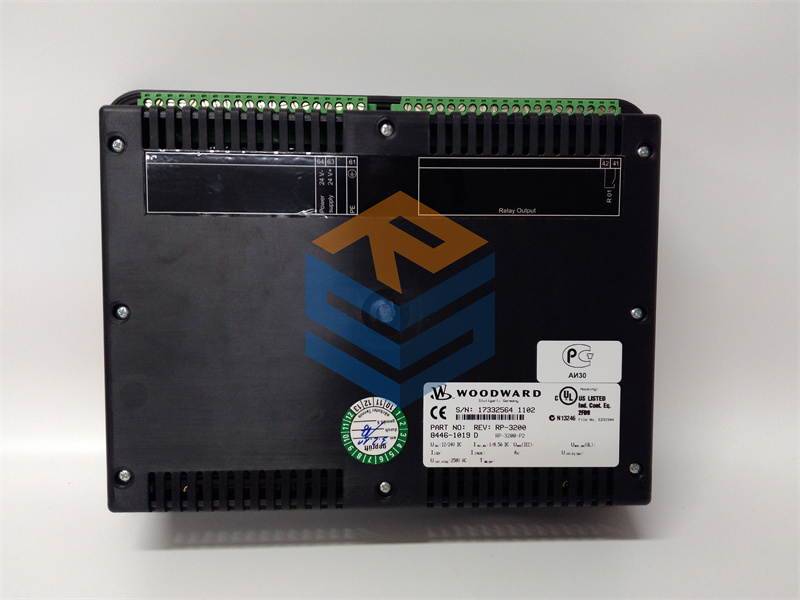
Description
PID algorithm control PID algorithm control The control principle of Woodward governor is the same as that of other control instruments, which are controlled by PID algorithm. First, let’s thoroughly understand what PID is? What is PID? PID is “proportional, integral”( integral, derivative “is a very common control algorithm. Algorithms are not edible. PID It has a history of 107 years. It is not a very sacred thing. You must have seen the practical application of PID. It is similar to this: PID will be of great use in situations where a certain physical quantity needs to be “kept stable” (such as maintaining balance, stabilizing temperature and speed, etc.). Then came the question: for example, I want to control a “fast heat” and keep the temperature of a pot of water at 50 ℃. Why should I use the theory of calculus for such a simple task. You must be thinking: It’s not easy to heat it when the temperature is less than 50 ° C, and cut off the power when the temperature is more than 50 ° C? A few lines of code are written in minutes with Arduino. That’s right~In the case of low requirements, you can really do this! But! If you put it another way, you know what the problem is: What if my control object is a car? If you want to keep the speed of the car at 50km/h, do you dare to do so. Imagine that if the constant speed cruise computer of the car detects that the speed is 45km/h at a certain time, it will immediately command the engine to accelerate! As a result, there was a sudden 100% full throttle buzz from the engine, and the car accelerated to 60km/h. At this time, the computer issued the command: brake! As a result, in most cases, controlling a physical quantity with “switching value” is relatively simple and crude. Sometimes, it can not be kept stable, because the microcontroller and sensor are not infinitely fast acquisition, and control takes time. Moreover, the control object has inertia. For example, if you unplug a heater, its “waste heat” (i.e. thermal inertia) may cause the water temperature to continue to rise for a little while. At this time, an algorithm is needed]: it can bring the physical quantity to be controlled near the target, it can “predict” the change trend of this quantity, and it can also eliminate the static error caused by heat dissipation, resistance and other factors… So, mathematicians at that time invented this unfailing algorithm — this is the PI Woodward Governor 8200-1302. You should have known that PD has three different regulating functions, It can be used alone (PID), two or two (PIPD), or three together (PID).
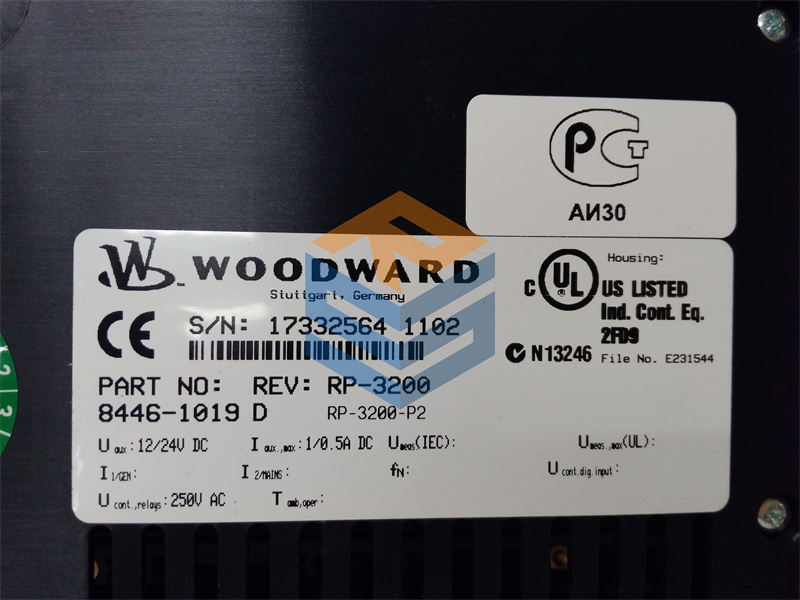
8446-1019