Description
Product Description
The
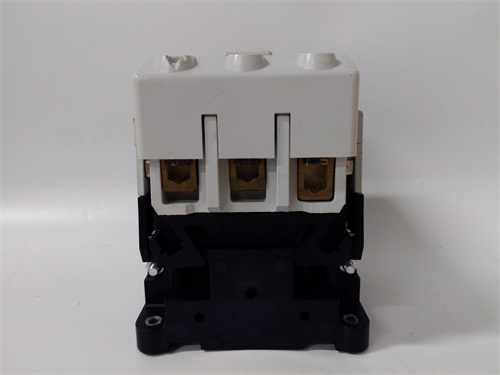
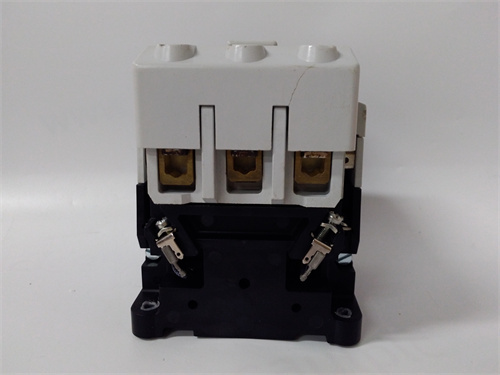
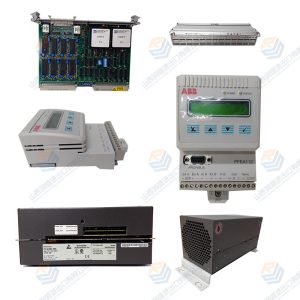
ABB DLM02 is a specialized digital I/O communication adapter module for the ABB Freelance distributed control system (DCS) and AC 700F controller platform. This module functions as a crucial fieldbus coupler, enabling the connection of external, distributed I/O stations to the main controller over the PROFIBUS DP-V1 network. The primary role of the
DLM02 is to act as a slave node on the PROFIBUS network, mapping data from connected digital I/O modules (like those in the ABB S200 I/O range) to the master controller. Implementing the
ABB DLM02 PROFIBUS Adapter expands the reach of the control system, allowing for flexible and cost-effective placement of I/O clusters close to field devices.
Product Parameters and Specifications
- Product Type: PROFIBUS DP-V1 Slave Communication Adapter for Distributed I/O.
- Compatible Systems: ABB Freelance DCS, AC 700F PLC.
- Fieldbus Protocol: PROFIBUS DP-V1 (slave/decive).
- PROFIBUS Interface: RS-485 connection via a front-facing 9-pin D-sub connector, supporting baud rates up to 12 Mbps.
- I/O Connection: Interfaces with a local I/O station via a dedicated parallel bus connection on its baseplate (e.g., connecting to S200 I/O modules via a DLM base unit).
- Addressing: PROFIBUS station address set via rotary switches on the front of the module.
- Diagnostic LEDs: Comprehensive status indicators for power, PROFIBUS communication, and I/O system status.
- Configuration: Requires configuration in the Freelance/AC 700F engineering tool (e.g., Control Builder F) to define the I/O module layout and data mapping to the PROFIBUS process image.
Advantages and Features
- Distributed I/O Architecture: The ABB DLM02 is the key component for creating remote I/O drops, drastically reducing field wiring costs by allowing I/O to be installed close to sensors and actuators while communicating over a single PROFIBUS cable.
- PROFIBUS DP-V1 Compatibility: As a DP-V1 slave, it supports not only cyclic data exchange but also acyclical services for parameterization, diagnostics, and alarm handling, providing deeper integration than basic DP.
- Seamless Integration with ABB Ecosystem: Designed for plug-and-play compatibility with ABB’s S200 I/O modules and the Freelance engineering environment. The I/O configuration is managed centrally, simplifying engineering and maintenance.
- Robust and Deterministic Communication: PROFIBUS DP provides deterministic and reliable data exchange suitable for industrial control, and the DLM02 module is built to operate reliably in harsh plant environments.
- Flexible System Expansion: Allows for the scalable expansion of the control system’s I/O capacity without requiring additional slots in the central controller rack, offering great flexibility for system modifications and upgrades.
Application Cases in Various Fields
- Water and Wastewater Treatment: Used to create distributed I/O panels across large treatment plants for pump control, valve actuation, and level measurement, connected back to a central Freelance SCADA system.
- Building Automation: Connects I/O clusters for HVAC, lighting, and access control in different building wings to a central management station over a cost-effective PROFIBUS network.
- Manufacturing Machine Control: Allows a main AC 700F controller to interface with I/O distributed across a large machine or assembly line, reducing control cabinet size and complexity.
- Food and Beverage Processing: Facilitates the connection of I/O from multiple processing skids (mixers, fillers, pasteurizers) to a unified DCS for batch process control.
Comparison with Competing Products
- vs. Direct I/O in Main Controller Rack: While central I/O is simpler for small systems, the enables distributed architecture, which is far more economical and practical for large plants with geographically spread equipment, saving significantly on cabling.
- vs. Generic PROFIBUS I/O Slaves from Third Parties: Third-party slaves may offer lower cost, but the ABB DLM02 guarantees seamless integration, predefined device profiles in the ABB engineering tool, and full technical support from a single vendor for the entire I/O chain.
- vs. Other Fieldbus Options in Freelance (e.g., Modbus): While Modbus is common, PROFIBUS DP offers higher speed, deterministic performance, and more sophisticated slave diagnostics, making the DLM02 a preferred choice for performance-critical or larger distributed I/O networks.
Selection Suggestions and Precautions
- Verify System Compatibility: Ensure your main controller (Freelance or AC 700F) supports PROFIBUS DP master functionality and that you have the appropriate master interface module or license.
- Network Planning is Critical: Properly plan the PROFIBUS network segment, including correct station addressing (unique for each DLM02), baud rate selection, cable type, and termination. Network length is limited by the chosen baud rate.
- Correct I/O Baseplate and Modules: The DLM02 requires a specific base unit (e.g., for S200 I/O). Verify the compatibility and power budget of the S200 I/O modules you intend to use in the remote station.
- Configuration Mapping: Carefully configure the I/O module layout in the engineering software. The logical arrangement