Description
Core Information: ABB DSQC652
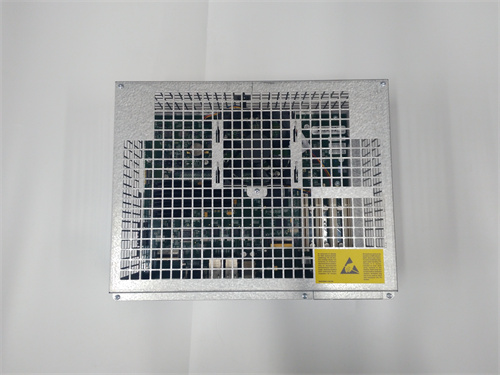
ABB DSQC652 is a high-performance digital I/O module designed exclusively for ABB industrial robots, part of the DSQC series of robot control accessories. It serves as a critical interface between robot controllers (e.g., IRC5, OmniCore) and external devices, enabling seamless signal exchange for automated production processes. Its applications span automotive manufacturing, electronics assembly, material handling, and packaging industries, where precise coordination between robots and peripheral equipment is essential.
Product Description
(Product Link: [Link to be provided by you]) is a modular digital input/output module engineered to expand the I/O capabilities of robot systems. Its core function is to transmit control signals from the robot controller to external devices (e.g., grippers, conveyors, fixtures) and feed back status signals from sensors to the controller, enabling closed-loop automation.
features 16 digital input channels and 16 digital output channels, all designed for 24V DC industrial-grade operation—compatible with most standard sensors and actuators. The module supports both PNP and NPN signal types for inputs, offering flexibility to match diverse field device configurations. A key strength of
ABB DSQC652 is its seamless integration with ABB robot controllers: it connects directly to the controller’s DeviceNet or Ethernet/IP bus, requiring no custom programming—only simple configuration via ’s RobotStudio software. The module incorporates galvanic isolation (250V AC) between channels and from the robot controller, effectively suppressing electromagnetic interference (EMI) from robot motors and industrial equipment, ensuring signal integrity in noisy production environments. Additionally,
includes built-in diagnostic functions, such as short-circuit protection for output channels and open-circuit detection for inputs, with fault alerts displayed on the robot’s teach pendant for quick troubleshooting. Its compact DIN rail-mounted design saves space in the robot control cabinet, while its rugged construction withstands the vibration and temperature fluctuations typical of manufacturing floors. As a genuine component,
guarantees compatibility with ’s full range of industrial robots, ensuring reliable performance for high-cycle automation tasks.
Technical Parameters
- Model: (Product Link: [Link to be provided by you])
- Product Type: Digital I/O expansion module for ABB industrial robots
- Compatible Controllers: ABB IRC5, OmniCore E10/E20, and previous-generation DSQC controllers
- Communication Bus: DeviceNet (default) / Ethernet/IP (configurable)
- Input Configuration: 16 digital inputs, PNP/NPN compatible
- Output Configuration: 16 digital outputs, sinking (open collector)
- Supply Voltage: 24V DC ±10% (powered by robot controller or external supply)
- Input Voltage Range: 18V DC – 30V DC (high level); 0V DC – 5V DC (low level)
- Output Voltage Rating: 24V DC (max 30V DC)
- Output Current: 0.5A per channel; 8A total for all outputs
- Response Time: ≤1ms (input and output)
- Isolation Voltage: 250V AC (channel-to-channel, channel-to-controller)
- Diagnostic Functions: Short-circuit protection (outputs), open-circuit detection (inputs), power fault monitoring
- Operating Environment: Temperature 0°C – 45°C, humidity 5% – 95% (non-condensing)
- Mounting: DIN rail (35mm standard) or direct mounting in robot control cabinet
- Dimensions (W×H×D): 22.5mm × 100mm × 150mm
- Weight: Approximately 0.3kg
- Certifications: CE, UL, CSA, IEC 61010-1
Key Advantages & Features
- Robot-Specific Optimization: Tailored for robots, ensuring plug-and-play compatibility and seamless integration with RobotStudio software.
- High I/O Density: 32 total channels (16 DI + 16 DO) in a compact 22.5mm-wide module, maximizing control cabinet space efficiency.
- Flexible Signal Compatibility: Supports PNP/NPN inputs and 24V DC outputs, adapting to diverse sensors and actuators.
- Robust Anti-Interference: Galvanic isolation and EMI compliance (IEC 61000-4) protect against noise from robot motors and industrial equipment.
- Simplified Configuration: No custom coding required—configure via RobotStudio’s intuitive interface, reducing commissioning time.
- Built-In Diagnostics: Real-time fault detection for short circuits, open circuits, and power issues, minimizing downtime with quick troubleshooting.
Application Fields & Cases
- Automotive Manufacturing (Welding Robot Cells): In an automotive body shop, ABB DSQC652 expands the I/O capabilities of an ABB IRB 6700 welding robot. The module controls the welding torch’s gripper (output channels) and receives feedback from position sensors (input channels) to confirm part alignment. It also interfaces with a conveyor system to signal when a welded part is ready for transfer—its fast response time (≤1ms) ensures synchronized movement between the robot and conveyor, boosting production throughput by 20%.
- Electronics Assembly (Pick-and-Place Robots): For an ABB IRB 120 pick-and-place robot in a smartphone assembly line, manages signals from vision sensors (inputs) that locate tiny components, and controls vacuum grippers (outputs) to pick and place parts. The module’s PNP/NPN compatibility allows integration with different sensor brands, while its diagnostic functions alert operators to a faulty gripper vacuum sensor—preventing component damage and reducing scrap rates.
- Material Handling (Palletizing Robots): In a logistics center, enables an ABB IRB 460 palletizing robot to communicate with a stretch wrapper and conveyor system. The module receives signals from pallet presence sensors (inputs) and triggers the stretch wrapper to start (outputs) once a pallet is fully loaded. Its rugged design withstands the vibration of the palletizing robot, ensuring reliable operation in 24/7 high-cycle environments.
Comparison with Competitors
| Parameter | ABB DSQC652 | Siemens SIMATIC ET 200SP (16DI/16DO) | Rockwell 1734-IB16/OB16 |
|---|---|---|---|
| Robot Compatibility | ABB IRC5/OmniCore (native) | Third-party robots (via bus adapter) | Third-party robots (via bus adapter) |
| I/O Density | 16DI + 16DO (22.5mm wide) | 16DI + 16DO (45mm wide) | 16DI + 16DO (50mm wide) |
| Response Time | ≤1ms | ≤2ms | ≤1.5ms |
| Configuration | RobotStudio (no coding) | TIA Portal (separate software) | Studio 5000 (separate software) |
| Native Bus Support | DeviceNet/Ethernet/IP (robot-integrated) | PROFINET (requires adapter for robot) | Ethernet/IP (requires adapter for robot) |
| Output Current | 0.5A per channel | 0.5A per channel | 0.5A per channel |
ABB DSQC652 outperforms competitors in robot-specific integration—unlike Siemens and Rockwell modules, it requires no external adapters or separate software for robots. Its smaller form factor (22.5mm vs. 45-50mm) offers superior space efficiency, while its faster response time ensures tighter synchronization with robot movements. For ABB robot users, it provides a cohesive, low-effort I/O expansion solution compared to cross-brand alternatives.
Selection Recommendations & Precautions
Selection Recommendations
- Robot Users: Prioritize for ABB IRC5/OmniCore robots to leverage native compatibility and avoid integration headaches with third-party modules.
- High-Cycle Applications: Choose this module for fast-paced processes (e.g., pick-and-place, welding) where ≤1ms response time is critical for synchronization.
- Space-Constrained Cabinets: Opt for if control cabinet space is limited—its compact design maximizes I/O density.
- Mixed-Sensor Environments: Select it for systems using both PNP and NPN sensors, as its dual-compatible inputs eliminate the need for signal converters.
Precautions
- Controller Compatibility: Verify that your robot controller (IRC5/OmniCore) supports the DSQC652—older controllers may require a firmware update.
- Correct Wiring: Follow ABB’s wiring diagrams to match input type (PNP/NPN) and avoid reversing output polarities, which can damage the module or external devices.
- Power Supply Matching: Use a regulated 24V DC power supply that can handle the total output current (max 8A) to prevent voltage drops.
- Bus Configuration: Configure the DeviceNet/Ethernet/IP bus settings in RobotStudio to match the robot controller’s bus parameters—mismatched settings will cause communication failures.
- Regular Maintenance: Periodically check the module’s diagnostic status via the robot teach pendant and inspect wiring for damage (e.g., fraying from robot movement).
- Genuine Parts Only: Use genuine ABB DSQC652 modules—non-genuine alternatives may lack compatibility with RobotStudio or fail to withstand robot vibration.
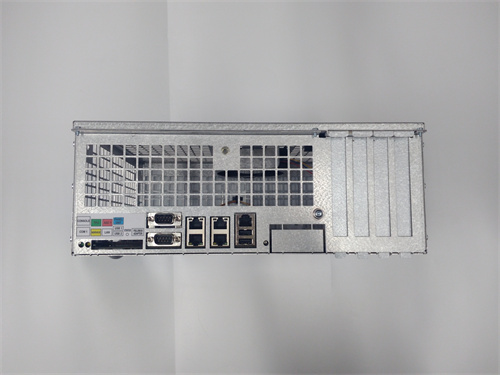
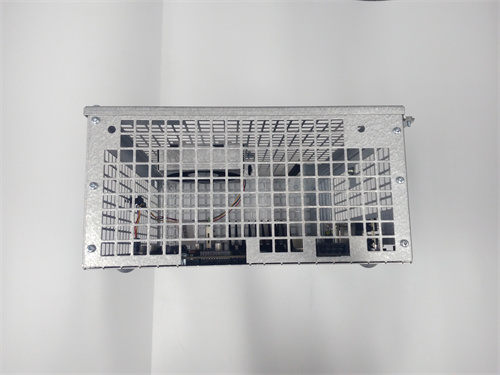
DSQC652