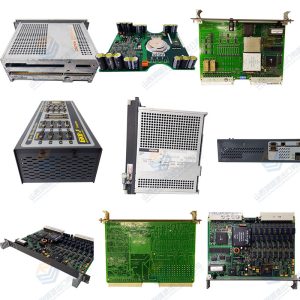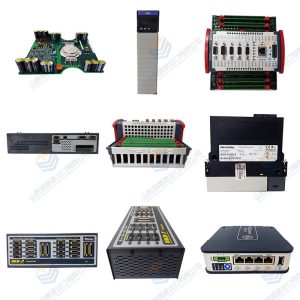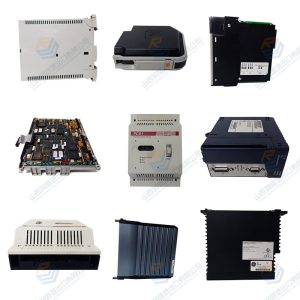
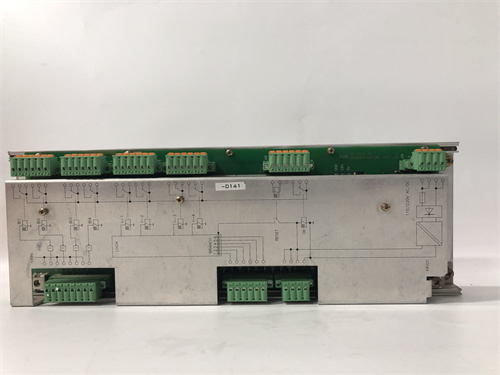
Description
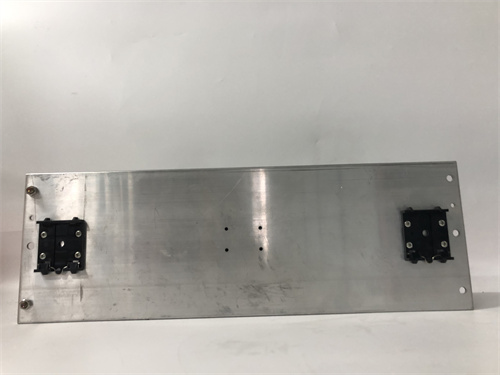
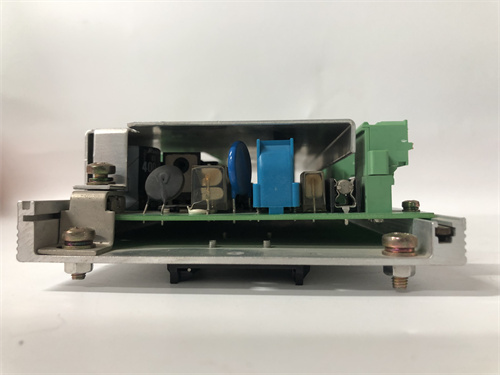
ABB USC329AE01 3BHB002483R0001 is a high-performance signal conditioning module designed for industrial automation systems, specifically engineered to process and standardize analog signals from field sensors (e.g., temperature, pressure, flow transducers) before transmitting them to controllers or DCS systems. It is widely used in power generation, oil and gas, and chemical industries where precise signal conversion and noise reduction are critical for reliable process control.
Core Functions and Key Advantages
The defining strengths of lie in its high-precision signal conditioning capabilities, strong anti-interference performance, and compatibility with diverse sensor types. It supports 8 independent input channels, each capable of accepting a wide range of analog signals: thermocouple (Type J/K/T/E), RTD (Pt100/Pt1000), and standard process signals (4-20mA/0-10V). This versatility eliminates the need for multiple single-type modules, simplifying system design and reducing inventory costs.
A key feature of ABB USC329AE01 3BHB002483R0001 is its advanced signal processing technology. It incorporates cold-junction compensation for thermocouple inputs (ensuring ±0.1°C measurement accuracy) and linearization for RTD signals (correcting non-linear resistance-temperature characteristics). Additionally, it includes a 2nd-order low-pass filter (configurable cutoff frequency: 0.1-100Hz) to suppress high-frequency electromagnetic noise—common in industrial environments near motors or power cables—which prevents false readings and ensures stable process control.
Another critical advantage is ’s galvanic isolation. Each input channel features 2500V AC isolation from the output and system ground, while outputs (standardized to 4-20mA or 0-5V) include 500V AC isolation. This dual isolation protects sensitive controller inputs from voltage surges or ground loops, a common issue in large-scale industrial systems with long sensor wiring.
Technical Specifications
| Category | Details |
|---|---|
| Input Channels | 8 independent channels; supports thermocouple (J/K/T/E), RTD (Pt100/Pt1000), 4-20mA/0-10V |
| Measurement Accuracy | Thermocouple: ±0.1°C; RTD: ±0.05°C; 4-20mA: ±0.05% FS |
| Output Signals | Standardized to 4-20mA or 0-5V (configurable per channel) |
| Isolation | Input-output: 2500V AC; Channel-channel: 500V AC; Input-ground: 2500V AC |
| Filtering | 2nd-order low-pass filter (0.1-100Hz, configurable) |
| Communication | Modbus RTU (RS485) or Modbus TCP (Ethernet); baud rate: 9600-115200 bps |
| Operating Environment | Temperature: -20°C to +60°C; Humidity: 5%–95% RH (non-condensing); IP20 (rack-mounted) |
| Power Requirements | 24V DC (±10%); Maximum Power Consumption: 15W |
| Certifications | CE, UL 508, IEC 61131-2, IEC 61000-6-2 (industrial EMC) |
Typical Application Scenarios
-
Power Generation: Steam Turbine Temperature Monitoring In a thermal power plant, ABB USC329AE01 3BHB002483R0001 is used to condition temperature signals from a steam turbine. Its 8 channels accept inputs from thermocouples (Type K) mounted on turbine bearings and RTDs (Pt100) measuring steam temperature. The module compensates for thermocouple cold-junction effects, filters out noise from turbine vibrations, and converts signals to standardized 4-20mA for transmission to the ABB 800xA DCS. If a bearing temperature exceeds 110°C, the DCS triggers an alarm and adjusts cooling water flow—preventing bearing damage.
-
Oil and Gas: Wellhead Pressure and Flow Control In an offshore oil well, processes signals from pressure transducers (4-20mA) and flow meters (0-10V) at the wellhead. Its galvanic isolation protects the onshore DCS from voltage surges caused by lightning or power fluctuations, while the low-pass filter eliminates noise from offshore wind and wave vibrations. The standardized 4-20mA outputs ensure the DCS receives accurate, stable data to regulate wellhead valves and optimize oil production.
-
Chemical Industry: Reactor Temperature Uniformity Control In a chemical reactor system, ABB USC329AE01 3BHB002483R0001 conditions signals from 8 RTDs (Pt100) placed at different locations inside the reactor. It linearizes the RTD signals to ensure ±0.05°C accuracy across the reactor, allowing the controller to detect temperature gradients and adjust heating elements accordingly. This ensures uniform reaction conditions, critical for producing high-quality chemical products and avoiding thermal runaway.
Comparison with Competitors
| Feature | ABB USC329AE01 3BHB002483R0001 | Competitor (e.g., Siemens SIMATIC PCS 7 Signal Module) |
|---|---|---|
| Input Versatility | Supports thermocouple/RTD/4-20mA/0-10V (all channels) | Single-type inputs (separate modules for thermocouple/RTD) |
| Measurement Accuracy | ±0.05°C (RTD), ±0.1°C (thermocouple) | ±0.1°C (RTD), ±0.2°C (thermocouple) |
| Isolation Level | 2500V AC (input-output); 500V AC (channel-channel) | 1500V AC (input-output); no channel-channel isolation |
| Filtering Flexibility | 0.1-100Hz (configurable 2nd-order filter) | Fixed 10Hz (1st-order filter) |
Selection Recommendations and Precautions
Selection Recommendations
- Diverse Sensor Environments: Choose if your system uses multiple sensor types (e.g., thermocouples + RTDs + 4-20mA transducers) to avoid redundant modules.
- High-Accuracy Requirements: Opt for this module for applications requiring precise temperature measurement (e.g., pharmaceutical reactors, turbine bearings) due to its ±0.05°C RTD accuracy and cold-junction compensation.
- Noisy Industrial Settings: Select ABB USC329AE01 3BHB002483R0001 for environments with electromagnetic noise (e.g., near motors, power cables) thanks to its 2nd-order filter and galvanic isolation.
Precautions
- Sensor Wiring: Use shielded, twisted-pair cables for sensor connections to maximize noise reduction. Ground the cable shield at the module side (not the sensor side) to avoid ground loops.
- Calibration: Calibrate the module annually using a traceable standard (e.g., ABB Calibration Kit) to maintain measurement accuracy, especially for thermocouple and RTD channels.
- Power Supply Stability: Ensure the 24V DC power supply is regulated (±10% tolerance) to prevent signal distortion. Use an uninterruptible power supply (UPS) for critical applications to avoid data loss during power dips.