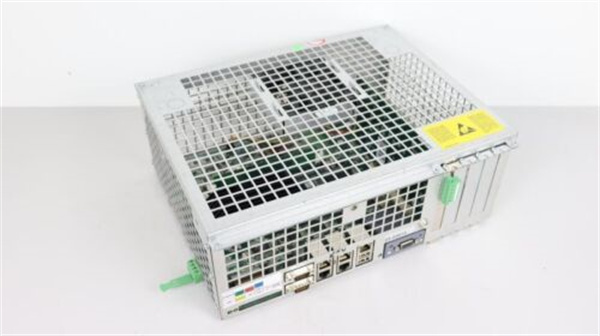
Description
Real – World Examples
- Automotive Assembly Line
In an automotive factory, the DSQC639 was used to control a robotic welding station. The digital inputs received signals from sensors that detected the position of car body parts. One day, a sensor malfunctioned, and the immediately detected an abnormal input signal. It quickly sent an alarm signal and stopped the welding process to prevent defective welding. This not only ensured the quality of the products but also protected the equipment from damage. - Packaging Machine
In a packaging plant, the controlled a high – speed packaging machine. The digital outputs were used to control the cutting and sealing operations. Due to its fast response time, the machine was able to accurately package products at a high speed. When there was a jam in the conveyor belt, the DSQC639 detected the change in the input signals from the sensors and immediately stopped the relevant operations, preventing product waste and machine damage.
Applications
- Automotive Manufacturing
In automotive assembly lines, the is widely used. For example, it can be used to monitor the position of robotic arms. The digital inputs receive signals from sensors on the robotic arms to determine their exact position, and the digital outputs can be used to control the movement and operation of the arms, such as starting and stopping specific tasks or adjusting the speed of movement. - Packaging Industry
In packaging machines, the can control the entire packaging process. It can receive signals from sensors that detect the presence and position of products on the conveyor belt, and then use the digital outputs to control the operation of packaging equipment, such as sealing machines, labeling machines, and cutting devices. - Food and Beverage Industry
In food processing and bottling plants, the DSQC639 can be used for quality control and process automation. It can monitor the filling level of bottles using sensors connected to the digital inputs and control the filling machines via the digital outputs. It can also be used to control the operation of conveyor belts, ensuring the smooth flow of products through the production line.
Weight and Dimensions
- Weight
The weighs approximately 1.2 kg, which is relatively light and easy to handle during installation and maintenance. - Dimensions
It has dimensions of approximately 200mm (length) x 150mm (width) x 50mm (height). These compact dimensions allow it to be easily installed in standard industrial control cabinets or on DIN – rails.
Features
- High – Density I/O
With 32 digital input and 32 digital output channels, the provides a high – density I/O solution, which is suitable for applications that require a large number of input and output points. - DeviceNet Compatibility
The support for the DeviceNet protocol makes it easy to integrate into existing industrial networks. This allows for seamless communication and data exchange with other devices in the network. - Robust Design
The device is designed to withstand harsh industrial environments. It has a sturdy enclosure that provides protection against dust, moisture, and mechanical vibrations.
Stability and Reliability
- Quality Components
The DSQC639 uses high – quality electronic components, which are carefully selected and tested during the manufacturing process. This ensures long – term stability and reliability. - Fault – Tolerant Design
It has built – in fault – tolerant mechanisms, such as over – current protection for the output channels and error – detection in the communication protocol. These features help to prevent system failures and ensure continuous operation. - Environmental Resistance
The robust enclosure and proper insulation protect the device from environmental factors such as temperature variations, humidity, and electromagnetic interference, further enhancing its stability and reliability.
Technical Specifications
- Power Supply
The typically operates on a 24V DC power supply. The allowable voltage range is from 21.6V to 26.4V, which ensures stable operation even when there are minor fluctuations in the power source. Its power consumption is relatively low, around 10 – 15W, making it energy – efficient. - Input and Output Channels
- Digital Inputs: It is equipped with 32 digital input channels. These inputs are designed to receive signals from various digital sensors such as limit switches, proximity sensors, and photoelectric sensors. The input voltage for these channels is 24V DC.
- Digital Outputs: There are 32 digital output channels. They can be used to control different types of actuators, including relays, solenoid valves, and indicator lights. Each output channel can handle a current of up to 2A.
- Communication Interface
The DSQC639 supports communication via the DeviceNet protocol. This allows it to be easily integrated into industrial networks and communicate with other DeviceNet – compatible devices, such as programmable logic controllers (PLCs) and other automation equipment. The communication speed can be set according to the specific requirements of the network, with common speeds including 125 kbps, 250 kbps, and 500 kbps. - Response Time
The response time of the digital inputs and outputs is very short, usually less than 10 milliseconds. This fast response time enables real – time control and monitoring in industrial applications.