Description
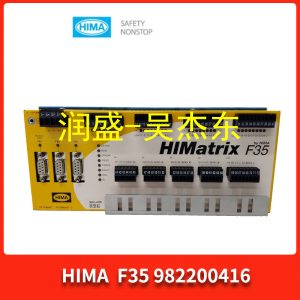
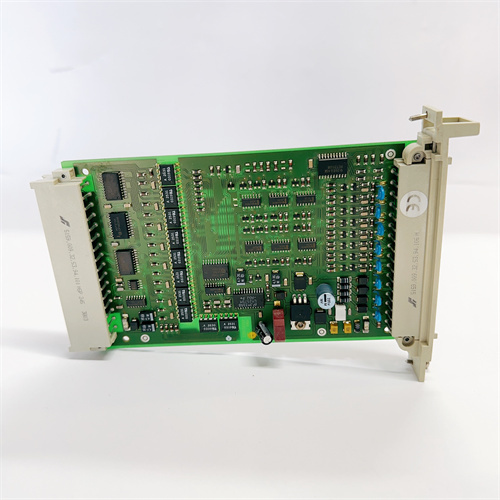
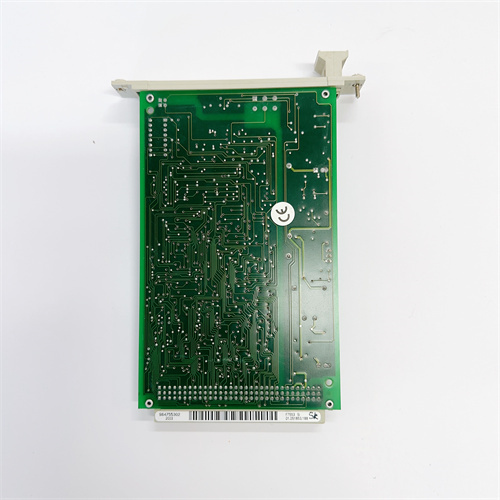
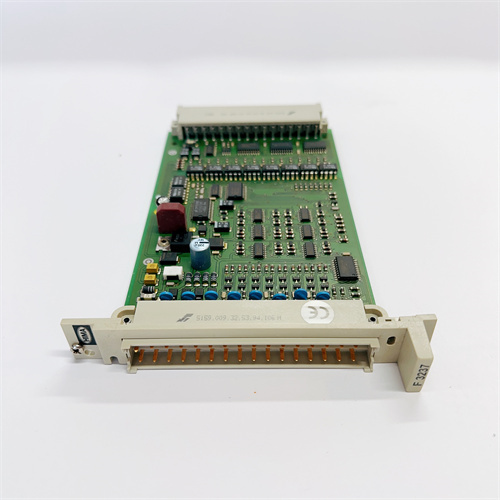
HIMA TM591-B00-G00 HIMA Safety Controller Module for SIL 3 Safety Instrumented Systems
Product Description
HIMA TM591-B00-G00 is a high-reliability safety controller module developed by HIMA, a global pioneer in Safety Instrumented Systems (SIS) for high-risk industrial processes. This module
is specifically designed to execute safety-related control logic, monitor critical process parameters, and trigger emergency shutdowns in explosive or hazardous environments, ensuring compliance with SIL 3 (IEC 61508) standards and strict safety regulations [Product Link]. Built with a fault-tolerant dual-core architecture, ruggedized hardware, and intrinsic resistance to electromagnetic interference (EMI) and extreme temperatures,
seamlessly integrates into ’s TMR (Triple Modular Redundancy) or dual-channel safety systems, widely deployed in oil & gas refineries, chemical plants, pharmaceutical facilities, and offshore platforms. As a core component of ’s safety portfolio,
delivers unparalleled fault detection capabilities and fail-safe performance, minimizing the risk of unmitigated accidents that could lead to personnel injury, environmental damage, or costly downtime [Product Link]. Whether controlling reactor temperature limits, pressure relief systems, or flammable gas detection circuits,
HIMA TM591-B00-G00 remains the benchmark for reliability in safety-critical applications, embodying ’s decades-long expertise in protecting industrial processes.
Technical Parameters
- Device Type: Safety controller module for Safety Instrumented Systems (SIS), dual-core fault-tolerant design
- Safety Integrity Level: SIL 3 compliance (IEC 61508), Category 4 (EN 954-1)
- Processor & Architecture:
- Dual 32-bit microcontrollers (lockstep synchronization) for redundant logic execution
- Independent watchdog timers and cyclic self-diagnostic routines
- Memory Specifications:
- Program Memory: 16 MB Flash (non-volatile, error-corrected)
- Data Memory: 8 MB RAM (with ECC – Error-Correcting Code)
- Configuration Retention: Non-volatile memory, data retention ≥ 10 years without power
- I/O Compatibility:
- Supported I/O Modules: HIMA TM series digital/analog input/output modules (e.g., TM510, TM520, TM530)
- Maximum I/O Points: Up to 1,024 digital points or 512 analog points (when paired with HIMA I/O racks)
- Communication Interfaces:
- Ethernet: 2 x Gigabit Ethernet ports (PROFINET IO, Ethernet/IP, Modbus TCP) with media redundancy
- Serial: 1 x RS-485 port (Modbus RTU) for legacy device integration
- Safety Network: HIMA SafetyNET p (redundant optical fiber communication, 100 Mbps)
- Power Supply:
- Input Voltage: 24 V DC (redundant power input, 18–30 V DC operating range)
- Power Consumption: ≤ 25 W (full load, including I/O communication)
- Environmental & Mechanical Specifications:
- Operating Temperature: -20°C to +60°C (operation), -40°C to +85°C (storage)
- Protection Class: IP20 (for installation in safety-rated cabinets)
- Mounting Type: DIN rail mounting (35 mm standard) or panel mounting
- Dimensions: 120 mm (width) × 180 mm (height) × 80 mm (depth)
- Weight: Approximately 1.2 kg
- Certifications & Standards:
- ATEX, IECEx, UL Class I Div 1/2 (for explosive atmospheres)
- Complies with IEC 61000-4 (EMC), IEC 61131-3 (programming languages: FBD, LD, ST, SFC)
Advantages and Features
’s most compelling advantage lies in its fault-tolerant dual-core architecture, where two synchronized microcontrollers execute identical logic and cross-verify results in real time. This design ensures immediate detection of processor or memory errors, triggering fail-safe actions to prevent dangerous failures – a critical requirement for SIL 3 applications. The module’s robust hardware, including industrial-grade components and EMI-shielded housing, enables reliable operation in harsh environments with high vibration, corrosive gases, or voltage fluctuations. Another key strength is its seamless integration with ’s safety ecosystem:
automatically recognizes compatible I/O modules, supports hot-swap replacement, and simplifies configuration via ’s Engineering Studio software, reducing commissioning time and human error. Additionally, the module offers comprehensive diagnostic capabilities, continuously monitoring internal circuits, communication links, and I/O connections, with detailed fault logs accessible remotely for rapid troubleshooting. Unlike conventional controllers,
prioritizes safety over functionality, ensuring that even in the event of a hardware failure, the system defaults to a safe state (e.g., shutting down processes or isolating hazardous equipment).
Application Fields and Cases
HIMA TM591-B00-G00 is extensively used in safety-critical industries where unplanned downtime or accidents carry severe consequences, including oil & gas, chemicals, pharmaceuticals, and nuclear power. In a large offshore oil platform’s gas processing unit,
serves as the core controller for the emergency shutdown (ESD) system. It monitors pressure, temperature, and gas detection sensors in Zone 1 explosive areas, and upon detecting abnormal values, triggers the closure of isolation valves and initiates platform evacuation procedures – all within 100 ms, preventing potential gas explosions. In a chemical plant’s reactor system,
controls the temperature and pressure safety loops, integrating with analog input modules to monitor reactor vessel conditions. If temperatures exceed predefined limits, the module immediately cuts off reactant feed and activates cooling systems, adhering to requirements to avoid thermal runaway. In a pharmaceutical manufacturing facility,
oversees the safety of sterile processing equipment, ensuring that any breach in pressure or contamination triggers an automatic shutdown, protecting both product integrity and operator safety.
Comparison with Competitors
Compared to similar safety controller modules such as Siemens F 410-5, ABB 800xA Safety PLC, and Emerson DeltaV SIS,
HIMA TM591-B00-G00 offers three distinct advantages. First, its dual-core lockstep architecture provides superior fault detection (99.9% fault coverage) compared to single-core competitors, making it better suited for SIL 3 applications where failure tolerance is non-negotiable. Second, its native compatibility with HIMA’s SafetyNET p – a dedicated safety communication protocol – ensures faster, more reliable data transmission than generic Ethernet protocols used by competitors, reducing latency in emergency response. Third,
supports hot-swap of I/O modules and controllers without system shutdown, minimizing downtime during maintenance – a feature not fully available in all competing products. While
has a higher upfront cost than some alternatives, its lower lifecycle costs (due to reduced maintenance and failure rates) and compliance with the strictest global safety standards make it the preferred choice for high-risk industries. Additionally, ’s extensive certification portfolio (ATEX, IECEx, UL) ensures broader applicability across international markets compared to regionally certified competitors.
Selection Suggestions and Precautions
When selecting , ensure alignment with the target Safety Instrumented System’s SIL requirement (SIL 3 is optimal, though it can be used for SIL 1/2 applications) and the type of hazardous environment (e.g., explosive gas or dust zones requiring ATEX/IECEx certification). Pair the module with compatible HIMA TM series I/O modules based on the number of digital/analog points needed, and verify compatibility with existing safety racks or controllers (e.g., HIMax, HIMA Planar). During installation, mount the module in a safety-rated cabinet with adequate ventilation, ensuring separation from high-voltage power cables (minimum 30 cm distance) to reduce EMI. Use redundant power supplies and redundant communication links (e.g., dual Ethernet cables) to maximize availability. Prior to commissioning, thoroughly test safety logic using ’s Engineering Studio software, including fault injection tests to validate fail-safe behavior. In daily maintenance, regularly review diagnostic logs, update firmware via ’s official portal, and replace components (e.g., power supplies) at recommended intervals (every 5–7 years). Note that HIMA TM591-B00-G00 must be configured and maintained by certified HIMA technicians to preserve SIL compliance – unauthorized modifications or use of non-genuine parts will invalidate safety certifications and compromise system reliability.
TM591-B00-G00