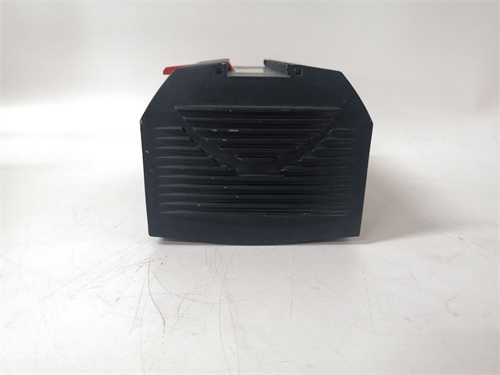
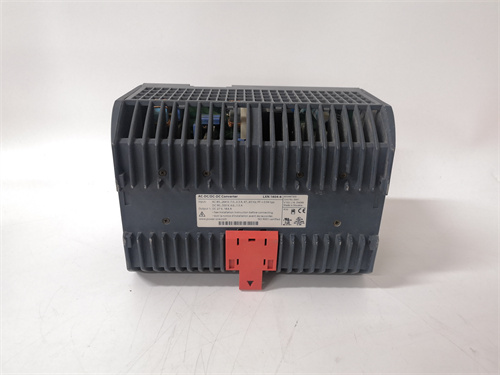
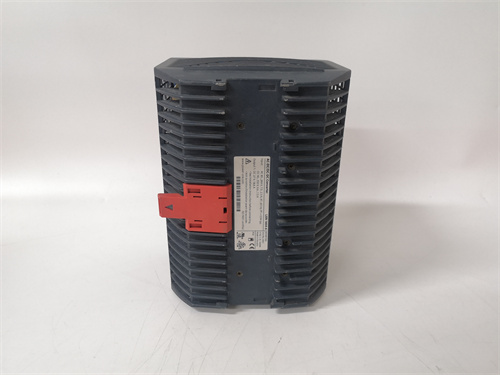
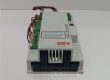
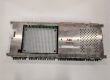
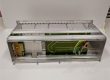
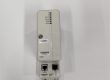
- Power Supply
- The LXN1604 – 6 3BHL000986P7000 typically operates on a DC power supply. The recommended input voltage ranges from 20.4V to 28.8V, which is common in industrial settings. The power consumption is relatively low, around 6 – 8W, ensuring energy – efficient operation.
- Input/Output Channels
- Digital Inputs: It is equipped with 16 digital input channels. These inputs can accept dry contact or wet contact signals, with a high – speed response time of less than 5ms, allowing for quick detection of external events.
- Digital Outputs: There are 4 digital output channels. The output type can be configured as either relay or transistor outputs. Relay outputs can handle a maximum load of 2A at 250VAC, while transistor outputs are suitable for low – power control applications.
- Communication Interface
- It features an Ethernet interface supporting 10/100 Mbps speed and the TCP/IP protocol. Additionally, there is an RS – 485 serial port that supports the Modbus RTU protocol, enabling seamless communication with other devices and control systems.
- Operating Environment
- The operating temperature range is from – 20°C to 60°C, and the relative humidity range is from 5% to 95% (non – condensing). This wide environmental tolerance allows it to be used in various harsh industrial environments.
- Industrial Automation
- In industrial production lines, it can be used to monitor the status of sensors such as limit switches, proximity sensors, and photoelectric sensors through digital inputs. Then, it controls the operation of actuators like motors, solenoid valves, and relays via digital outputs, ensuring the smooth running of the production process.
- Building Automation
- For building management systems, it can be used to monitor and control access control systems, lighting systems, and HVAC systems. For example, it can detect the opening and closing of doors through digital inputs and control the lighting according to the occupancy status.
- Machine Control
- In machine – tool control applications, it can monitor the position and movement of machine parts using digital inputs and control the start, stop, and speed of the machine through digital outputs.
- Weight
- The device weighs approximately 1.2 kg, which is relatively light and easy to install and handle.
- Dimensions
- It has dimensions of about 200mm (length) x 150mm (width) x 80mm (height). The compact design allows it to be easily installed in control cabinets or other limited – space environments.
- High – Speed Response
- With its fast – responding digital inputs and outputs, it can quickly detect and respond to changes in the external environment, ensuring real – time control in industrial applications.
- Flexible Configuration
- The ability to configure the output type (relay or transistor) and communication settings provides flexibility to meet different application requirements.
- Ease of Integration
- The support for standard communication protocols (TCP/IP and Modbus RTU) makes it easy to integrate into existing control systems, reducing the complexity of system upgrades.
- Robust Design
- The device is built with high – quality components and a durable enclosure, which can withstand vibrations, dust, and electromagnetic interference in industrial environments.
- Fault – Tolerant Software
- The software has self – diagnostic and error – handling functions. In case of a fault, it can quickly detect the problem and take appropriate actions to ensure continuous operation.
- Long – Term Performance
- Through strict quality testing and long – term stability verification, it can maintain reliable performance over an extended service life.
- Automotive Manufacturing Plant
- In an automotive manufacturing plant, the LXN1604 – 6 3BHL000986P7000 is used to monitor the position of parts on the assembly line using digital inputs. It then controls the robotic arms to perform assembly tasks through digital outputs, ensuring precise and efficient production.
- Warehouse Automation
- In a warehouse automation system, it can monitor the status of conveyor belts, storage racks, and access gates using digital inputs. It controls the movement of goods – handling equipment such as forklifts and automated guided vehicles (AGVs) through digital outputs, improving the efficiency of warehouse operations.